Today's homes and commercial buildings are packed with microprocessorboards—from variable-speed HVAC inverters, smart refrigerators, and washer control boards to LED drivers and AFCI/GFCI breakers. Cheap plug-in power strips cannot stop high-energy voltage spikes entering through your main utility lines or AC condensing unit. Scotty Electric Co. installs industrial-grade Type 1 and Type 2 Surge Protective Devices (SPDs) engineered to clamp transients at the panel before they reach your equipment.
External Utility & Lightning Surges vs. Internal Inductive Surges
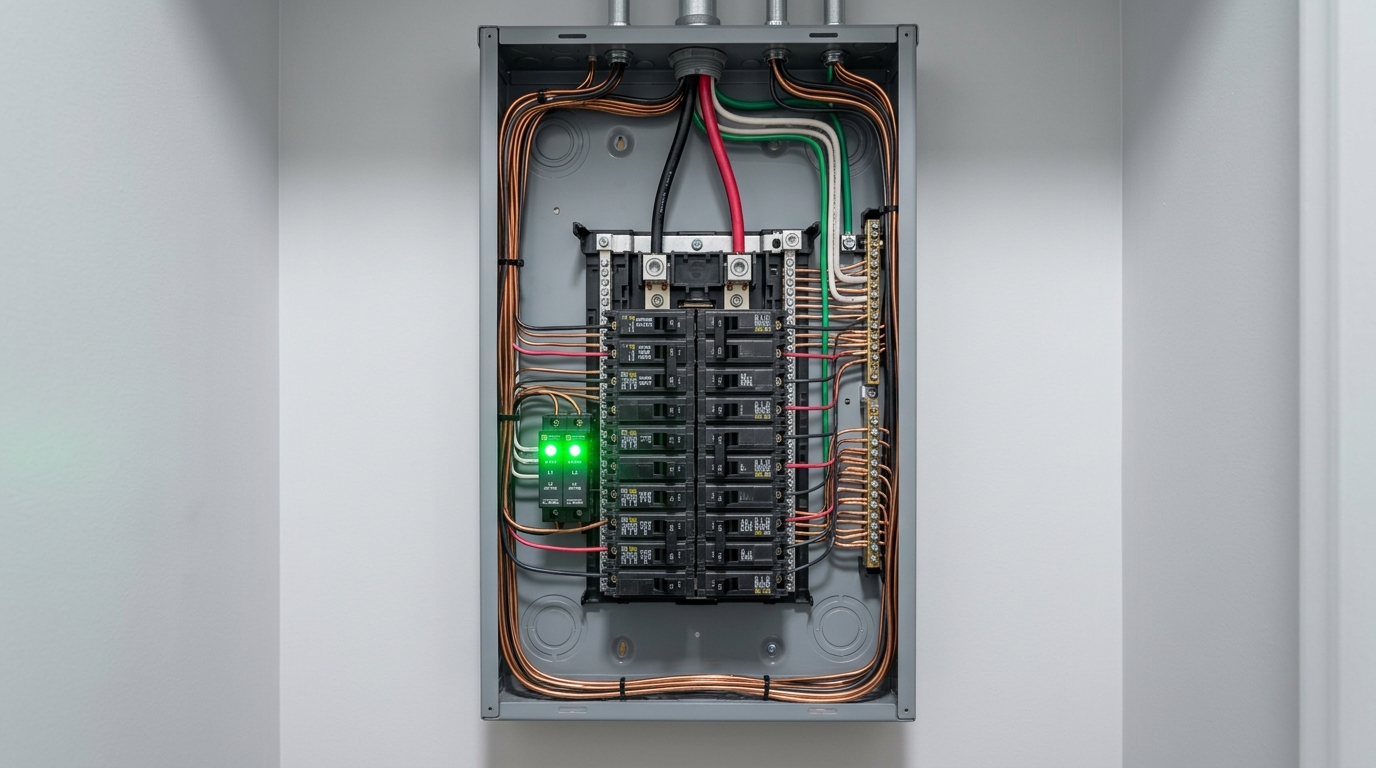 FIELD INSTALLATION EXAMPLE
Most people think of surge protection only during severe Oklahoma spring thunderstorms. While nearby lightning strikes and utility grid recloser switching produce massive external spikes, up to 60–80% of damaging voltage transients actually originate inside the building as motors, compressors, and pumps cycle on and off.
When a whole-home SPD is wired directly to your main breaker panel bus, it monitors both 120V legs continuously. The instant voltage spikes above normal clamping thresholds, the SPD diverts excess energy harmlessly to the grounding system within nanoseconds.
- Type 1 SPDs installed on the line or load side of the main service disconnect
- Type 2 high-capacity SPDs mounted directly adjacent to the main load center
- Dedicated outdoor HVAC condenser disconnect surge suppressors
- Visual diagnostic LED status indicators for instant health verification
A surge protector is only as good as how it is wired. Every extra inch of wire lead adds inductance during a high-frequency lightning pulse, raising the 'let-through' voltage. We mount SPDs right next to the closest breaker slots and keep conductors short, straight, and twisted together.
Understanding Type 1, Type 2, and Point-of-Use (Type 3) Protection
The National Electrical Code classifies Surge Protective Devices by where they are listed to be installed in the distribution system:
Type 1 SPDs are permanently connected devices listed for installation before or after the main service disconnect (ideal for exterior meter-mains). Type 2 SPDs are permanently connected on the load side of the service disconnect (ideal for interior main panels and subpanels). Pairing a panel-mounted Type 1/Type 2 SPD with quality Type 3 point-of-use strips at home offices or entertainment centers creates a true layered defense.
 TECHNICAL SPECIFICATION
What We Find vs. How We Build It
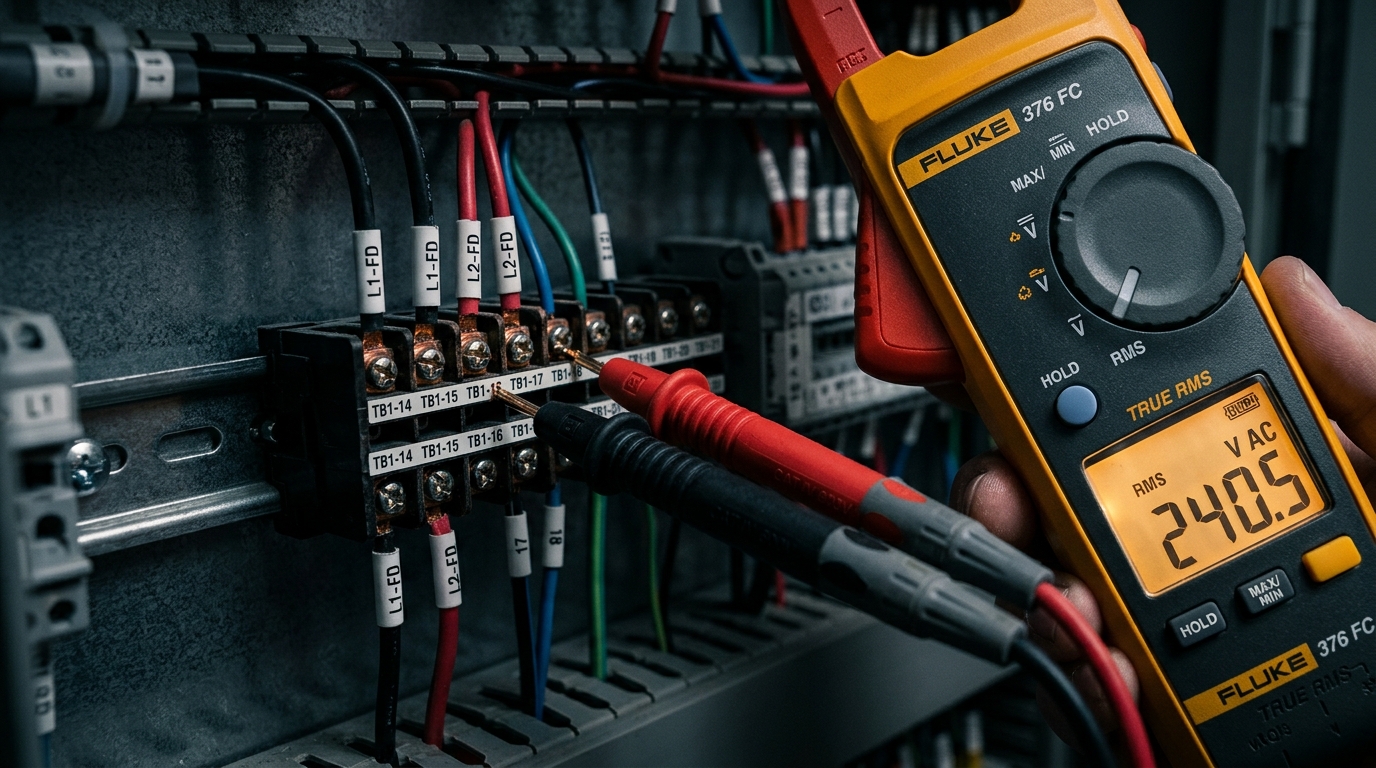

Why We Do It This Way — Surge Protection Code & Physics
Recent editions of the National Electrical Code elevated surge protection from an optional upgrade to a mandatory safety requirement on dwelling services:
Mandatory Surge Protection for Dwelling Services
Requires all electrical services supplying dwelling units to be provided with a Type 1 or Type 2 Surge Protective Device (SPD)—and applies whenever an existing service equipment panel is replaced.
Protects not only your expensive appliances and HVAC inverters, but also the electronic trip circuits inside your life-safety AFCI, GFCI, and smoke/CO alarm systems.
Short, Uncoiled Conductor Routing for Low Let-Through Voltage
Requires SPD conductors to be kept as short as practicable and free of sharp bends or loops. High-frequency surge impulses experience high inductive reactance in long or coiled wires.
By installing the SPD breaker directly adjacent to the SPD enclosure with short, straight leads, we minimize let-through voltage so sensitive electronics actually survive a strike.
Surge Protection Depends on a Verified Grounding Electrode System
An SPD cannot make voltage disappear; it clamps voltage differences between hot, neutral, and ground and diverts surge current onto the grounding system.
Whenever Scotty Electric installs a whole-home SPD, we also inspect your main bonding jumper and grounding electrode connection so the surge has a low-impedance path to earth.