A ceiling fan is not a static light fixture—it is a rotating motor assembly that subjects its mounting box to continuous rotational torque, dynamic vibration, and dead weight. One of the most common hazards we discover in Tulsa homes is a heavy paddle fan hung from a thin plastic nail-on box or drywall screws that were only rated for a 6-pound bedroom light. Scotty Electric Co. mounts ceiling fans the right way: anchored directly to ceiling joists or heavy-duty expandable steel braces using UL-listed fan-rated boxes.
How We Mount Ceiling Fans: Joist Saddle Boxes & Expandable Steel Braces
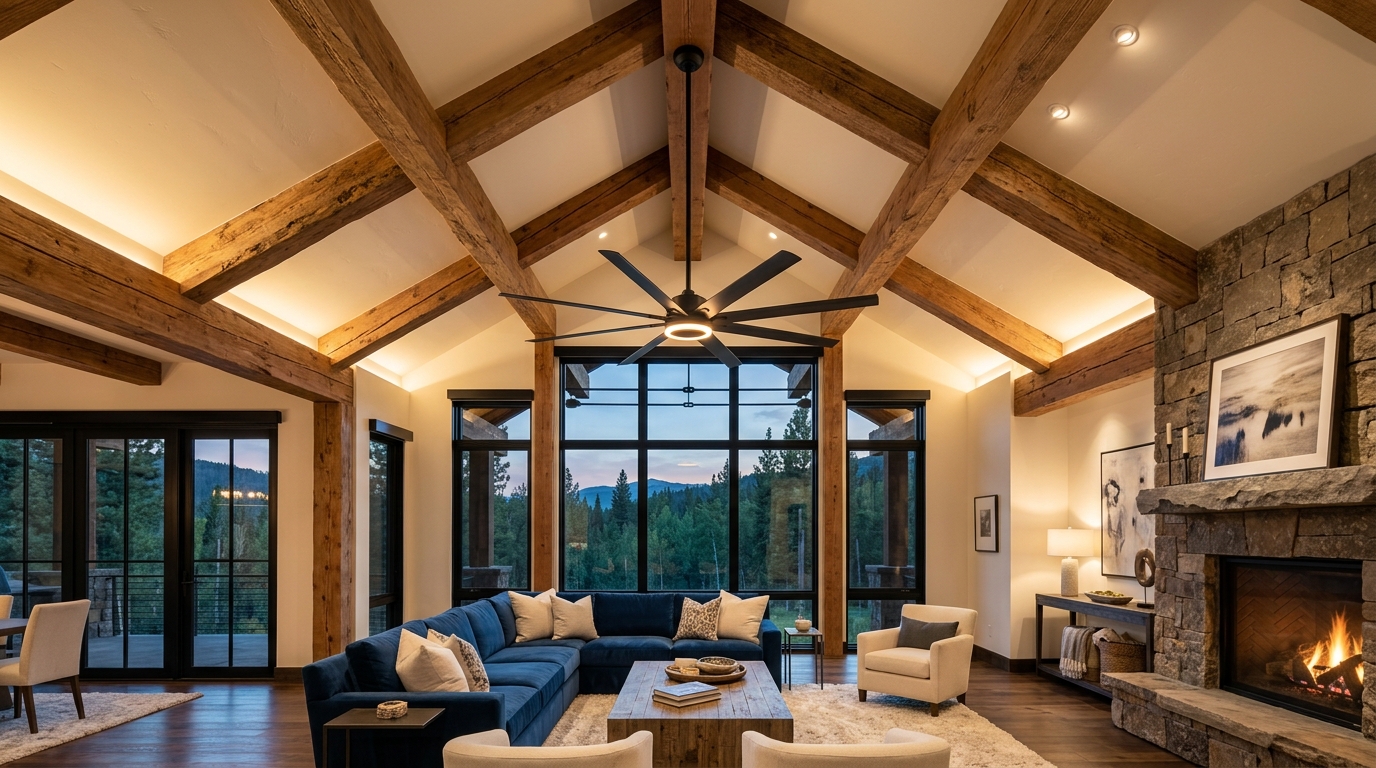 FIELD INSTALLATION EXAMPLE
Before hanging any fan, we remove the existing fixture and inspect the junction box and framing above the drywall. Standard #8-32 machine screws on a regular light box can strip or shear under constant fan vibration. Listed ceiling fan boxes use heavier #10-32 machine screws or high-strength structural posts that anchor directly into the wood framing or metal brace.
When a fan location falls directly on a ceiling joist, we install a heavy-duty steel saddle box lagged directly into the structural wood. When the fan is centered between two joists—even in finished ceilings with no attic access above—we use a retrofit expandable steel fan brace that locks into the adjacent joists from through the 4-inch ceiling opening.
- Replacement of standard plastic/metal light boxes with UL-listed 70 lb+ fan-rated boxes
- Zero-patch retrofit steel bracing between joists on finished 1st-floor ceilings
- Direct framing lag-bolt mounting for heavy oversized (60"–84"+) windmill & patio fans
- Dual-switch 3-wire (14/3 or 12/3) retrofits for separate wall control of fan and light
 UNSAFE BUILDER SHORTCUT
Thin plastic boxes flex and crack under constant rotational fan torque, leading to wobbling blades or falling fixtures.
 NEC 314.27(C) COMPLIANT
Heavy #10-32 machine posts anchored directly into structural ceiling framing or a locked steel retrofit brace.
90% of noisy, wobbling ceiling fans trace back to a flexing plastic junction box in the ceiling or using a standard dimmer switch on a fan motor. Once the box is rigidly locked to the framing with a steel fan brace, the fan runs whisper-quiet.
Vaulted Ceilings, Tall Foyers, Downrod Sizing & Damp-Rated Patios
High living room ceilings, A-frame beams, and covered Oklahoma back patios require specialized mounting hardware. For sloped or vaulted ceilings, we install high-angle canopy kits so the downrod hangs plumb without binding against the bracket ball.
We also size downrods properly so the fan blades sit at the optimal aerodynamic height (typically 8 to 9 feet off the floor, and never less than 7 feet per safety clearances) so air actually circulates instead of stalling trapped against the peak of the vault.
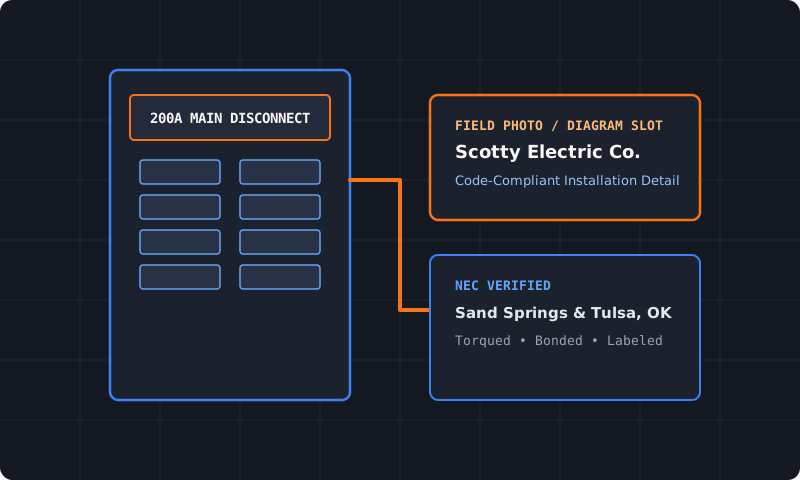 TECHNICAL SPECIFICATION
What We Find vs. How We Build It
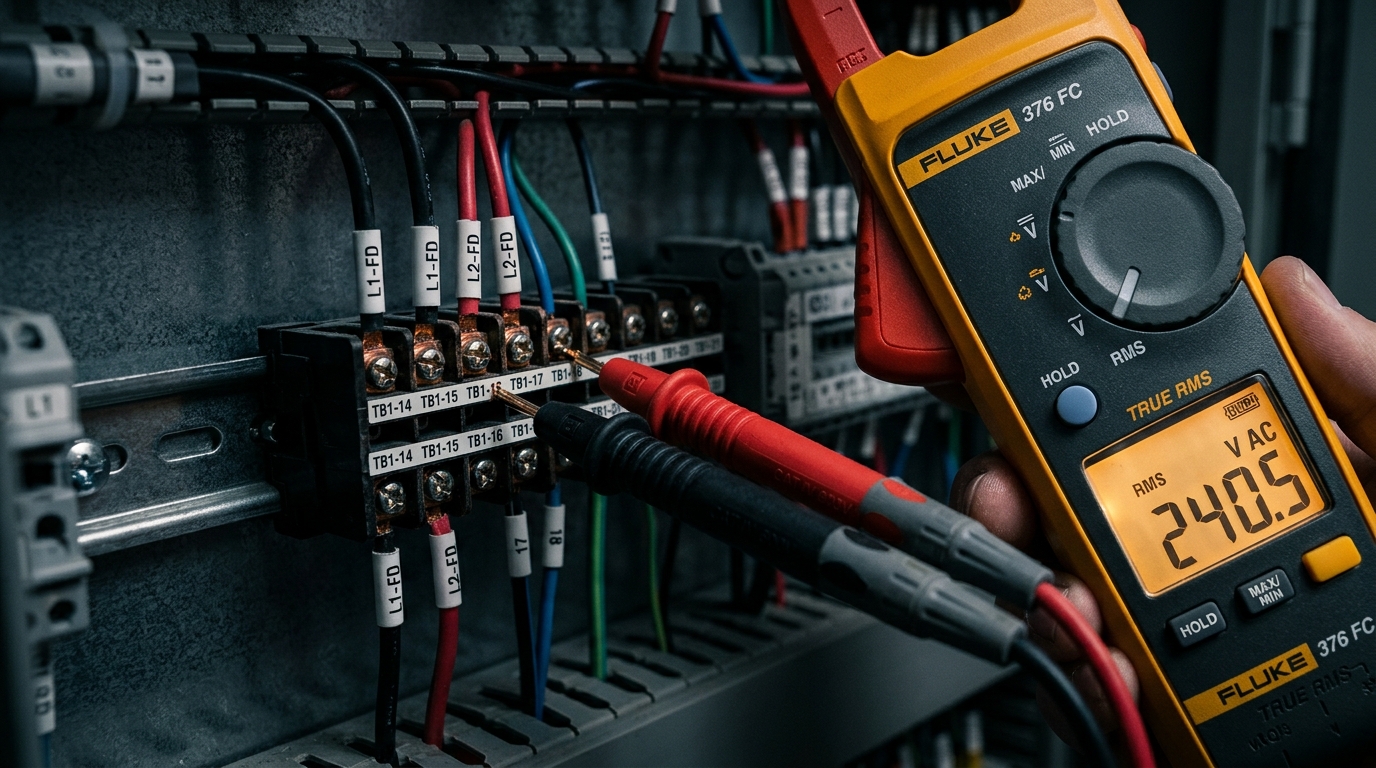

Why We Do It This Way — Ceiling Fan Mounting & Box Code Items
Here are the specific National Electrical Code rules that govern why ceiling fans require specialized structural boxes and support:
Mandatory Boxes Listed for Ceiling-Suspended (Paddle) Fan Support
Outlet boxes used as the sole support of a ceiling-suspended (paddle) fan MUST be listed and permanently marked 'Acceptable for Fan Support' inside the box. Furthermore, in habitable rooms of new construction where a ceiling outlet is located in a framing area that could accommodate a fan, a fan-rated box (or structural framing provision) is required up front.
Prevents a 35-to-60 pound spinning ceiling fan from pulling out of the ceiling and falling into your living room or bedroom.
Structural Support of Ceiling-Suspended Paddle Fans Over 35 lbs / 70 lbs
Requires ceiling fans to be supported independently of the outlet box unless the box is listed for the specific weight of the fan (typically up to 70 lbs for dynamic loads). Fans exceeding the listed box rating must be anchored directly to the building structure independent of the electrical box.
Ensures heavy industrial, commercial, or oversized decorative patio fans have dedicated structural steel or timber support.
Damp/Wet Location Ratings & Proper Motor Speed Controls
Fans installed on covered porches or pergolas must be marked 'Suitable for Damp Locations' (or Wet Locations if exposed to wind-driven rain), and wall switches controlling fan motors must be listed for inductive motor loads—never standard incandescent/LED light dimmers.
Prevents drooping blades, rusted motor windings on outdoor patios, and overheated/buzzing fan motors caused by incompatible wall dimmers.