A solar photovoltaic (PV) array is an active electrical power plant mounted on your roof or property. Unlike normal household circuits that can be de-energized by flipping the main breaker, solar modules generate DC voltage whenever sunlight hits them. Scotty Electric Co. handles the critical electrical side of PV installations—from conduit pathways, string/microinverter wiring, and rapid shutdown compliance to utility-interactive panel interconnections.
DC & AC Conduit Routing, Inverters & Rapid Shutdown
 TECHNICAL OVERVIEW
Whether a system uses rooftop microinverters (converting DC to 240V AC directly beneath each panel) or a string inverter with DC optimizers, the wiring on and inside the building must withstand extreme Oklahoma roof temperatures, UV exposure, and wind uplift.
Just as importantly, NEC Article 690 requires rooftop PV systems on buildings to include a Rapid Shutdown function that reduces voltage to safe levels within seconds when initiated at the exterior disconnect.
- String inverter, microinverter, and hybrid battery-ready electrical integration
- EMT metallic conduit protection for interior DC source/output circuits
- Exterior lockable AC/DC disconnects and permanent reflective directory plaques
- Troubleshooting and repairing orphaned or improperly wired solar arrays
Any PV DC conductors routed inside a building prior to the rapid shutdown or disconnect must be enclosed in a metal raceway (such as EMT) or metal-clad cable, and clearly labeled 'WARNING: PHOTOVOLTAIC POWER SOURCE' every 10 feet so future workers never mistake live DC lines for standard wiring.
Panel Interconnections: The 120% Busbar Rule & Line-Side Taps
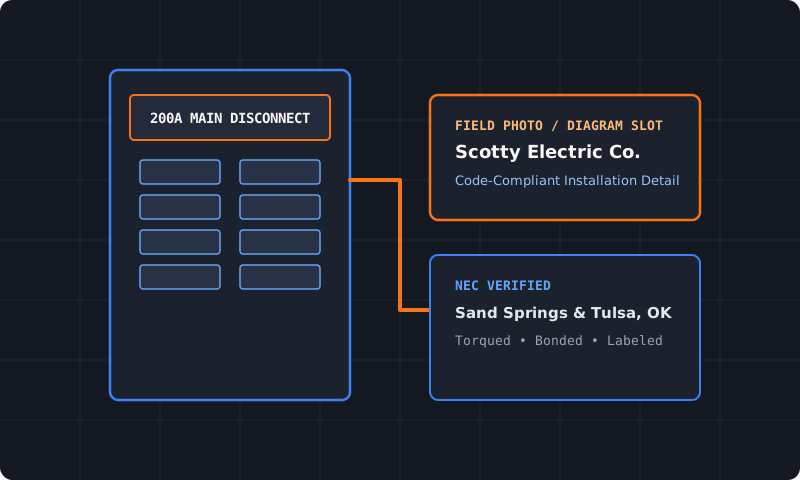
You cannot simply snap a 50-amp solar backfeed breaker into any open slot in a 200-amp residential panel. Because the panel's copper or aluminum busbars can now be fed by BOTH the 200A utility main breaker and the solar breaker simultaneously, the code strictly regulates total busbar loading.
We evaluate your existing service equipment using NEC 705.12 calculations to determine whether a backfed breaker at the opposite end of the busbar, a main breaker derate, or a listed supply-side (line-side) tap is the right engineering choice.
TECHNICAL SPECIFICATION
What We Find vs. How We Build It
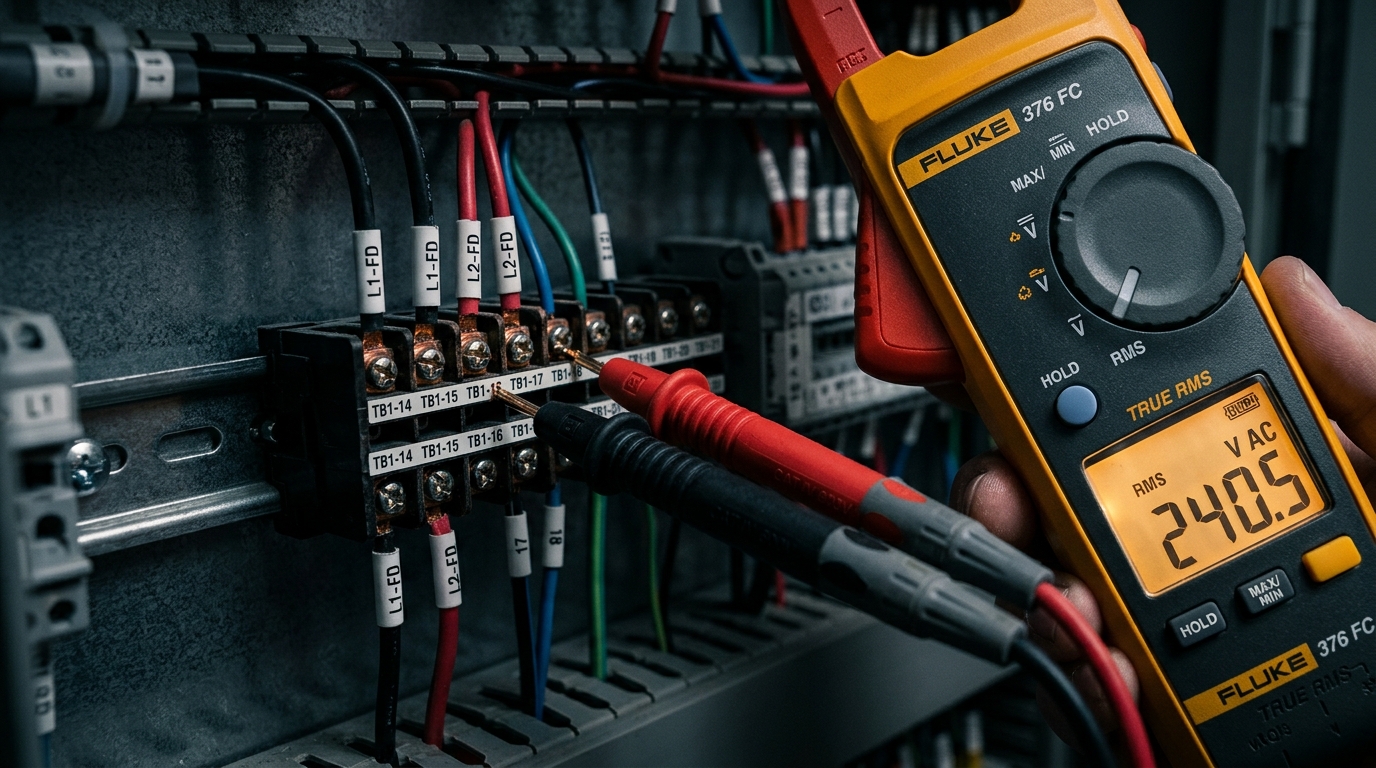

Why We Do It This Way — Solar PV Code & Interconnection Standards
Solar PV involves dual power sources on a single building. Here are the key code rules that govern safe PV installations:
Rapid Shutdown of PV Systems on Buildings
Requires PV system circuits installed on or in buildings to include a rapid shutdown function that drops controlled conductors to 80V or less within the array boundary (and 30V or less outside the array boundary) within 30 seconds of initiation.
Allows firefighters to safely ventilate a roof or fight a structure fire without facing lethal, un-switchable DC voltage from solar panels.
The 120% Busbar Rule & Opposite-End Breaker Placement
When connecting a solar inverter breaker to a load-side panelboard, the sum of 125% of the inverter output current plus the rating of the main breaker cannot exceed 120% of the busbar's ampacity rating—and the solar breaker must be positioned at the opposite end of the busbar from the main utility feed.
Prevents localized overheating and busbar meltdown in the middle of your breaker panel when solar production and household loads peak at the same time.
Metal Raceway Protection & Marking for Interior DC Circuits
PV system DC circuits that run inside a building must be contained in metal raceways (like EMT conduit) or Type MC metal-clad cable from the point of penetration to the first readily accessible disconnecting means, with permanent reflective warning labels.
Protects high-voltage DC conductors from physical damage by nails, screws, or rodents in your attic.
Permanent Directory & Rapid Shutdown Plaque
Requires a permanent, weather-resistant reflective diagram/plaque at the service entrance showing all power sources and how the rapid shutdown system operates.
Required for municipal inspection approval and utility PTO (Permission to Operate) across Oklahoma utilities.