If there is one subject in electrical work that separates true craftsmen from shortcuts, it is Grounding and Bonding. Many people assume ground rods exist to make circuit breakers trip. In reality, earth is a poor conductor—bonding to the utility neutral is what clears faults, while grounding electrodes stabilize voltage against lightning and line surges. On this page, we explain why grounding and bonding matter so much, and exactly how Scotty Electric Co. operates when you hire us.
Grounding vs. Bonding: Why Both Are Non-Negotiable
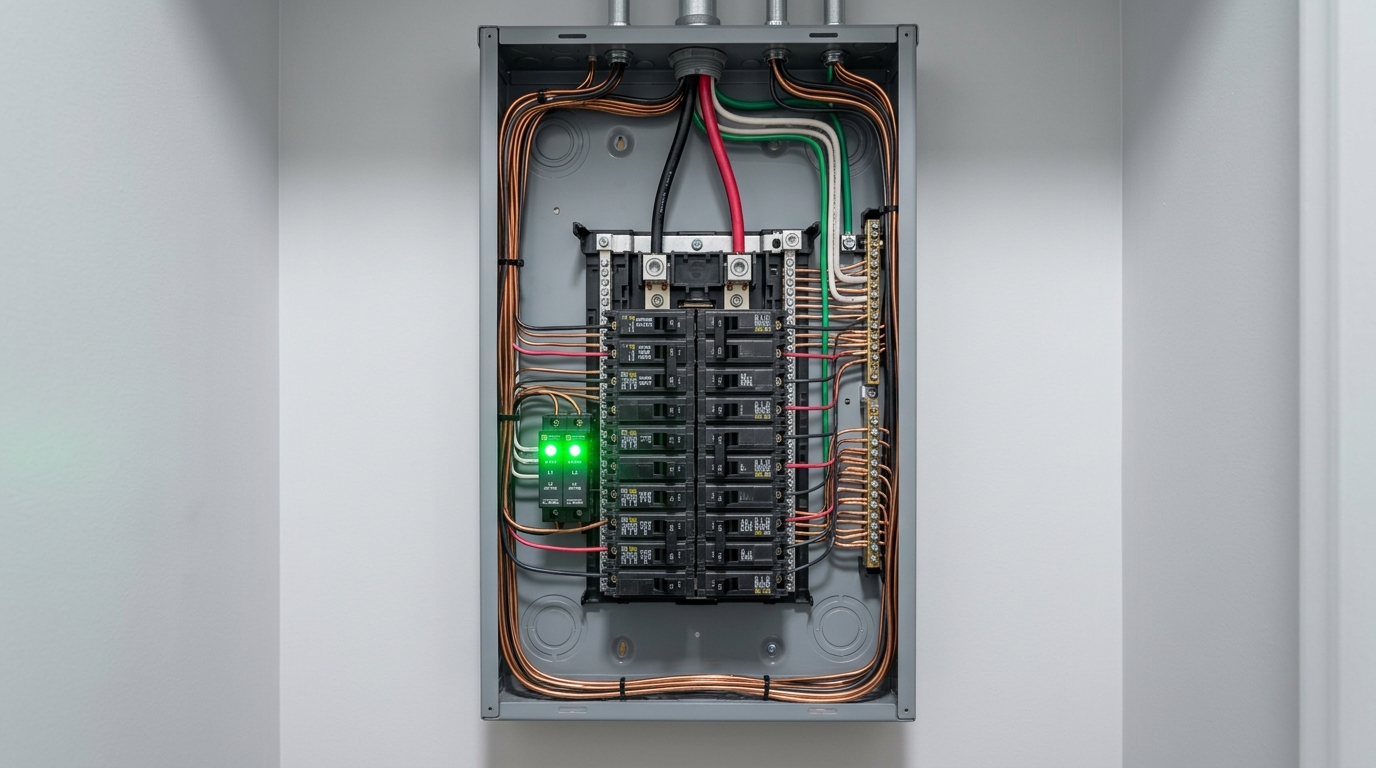 FIELD INSTALLATION EXAMPLE
Although the terms are often lumped together, Grounding and Bonding perform two distinct jobs in your electrical system:
Grounding (connecting the system to earth via driven ground rods, concrete-encased Ufer electrodes, or metal water pipes) connects your electrical system to the earth so lightning, static charges, and high-voltage line contact have a reference to earth. Bonding (mechanically and electrically joining all metal enclosures, conduits, water pipes, appliance frames, and the main service neutral) creates a continuous, low-impedance metal pathway back to the utility transformer so that if a hot wire ever touches a metal case, massive fault current flows immediately and trips the breaker in milliseconds.
- Driven copper-clad ground rods & supplemental electrode pairs (spaced 6+ ft apart)
- Concrete-encased electrodes (Ufer grounds) tied into footing rebar on new builds
- Main Bonding Jumper verification at the primary service disconnect
- Intersystem Bonding Termination (IBT) blocks for telecom, coax, and satellite grounds
If a metal appliance frame is only connected to a dirt ground rod without being bonded back to the service neutral, a 120V short to that frame encounters ~25 ohms of earth resistance. By Ohm's Law (120V / 25Ω = 4.8 Amps), a 20A breaker will NEVER trip—leaving the metal frame permanently energized at 120 volts!
How Scotty Electric Co. Operates: Our Field & Service Standards
We built Scotty Electric Co. to serve Tulsa and the surrounding 50-mile radius with straightforward communication, clean workmanship, and multi-discipline capability. Whether we are mounting a ceiling fan in a living room, pulling fiber optic cable across a warehouse, or wiring a 3-phase motor starter, we follow the same disciplined workflow:
1. Diagnose & Calculate First: We don't guess. We measure voltage drop, inspect neutral/ground integrity, perform load calculations, and explain the exact root cause before starting work. 2. Transparent Code & Practical Reasoning: We never use 'it's code' as a vague excuse to upsell. We explain what the standard is and how it protects your building. 3. Clean Mechanical Execution: Level conduit runs, labeled panels, properly supported cables, torqued lugs, and spotless jobsite cleanup.
 TECHNICAL SPECIFICATION
- Commercial & Residential Service Calls & Diagnostics
- Residential & Small Commercial New Construction & Remodels
- Light Industrial Motor Controls, Starters, VFDs & Relay Logic
- Voice, Data, Structured Copper (Cat6/6A) & Fiber Optic Termination
What We Find vs. How We Build It
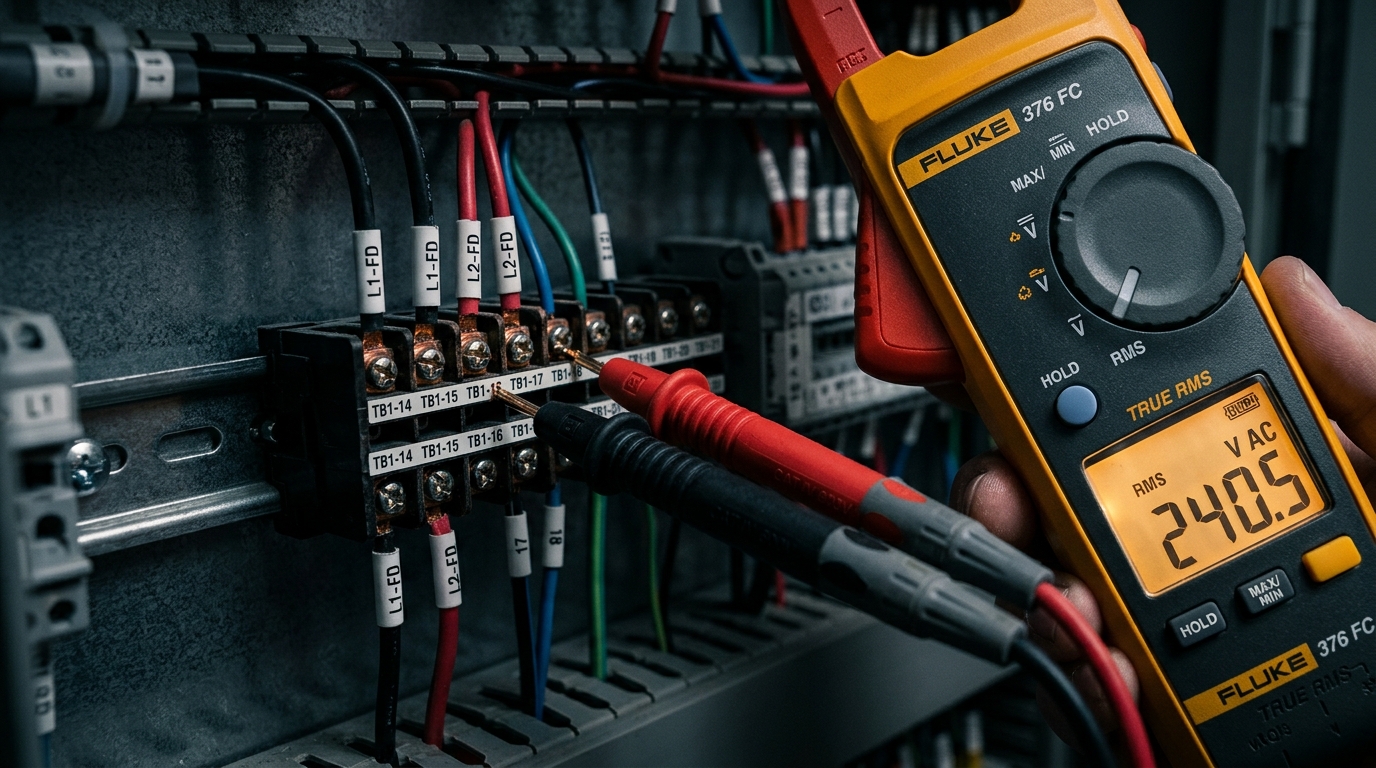

Why We Do It This Way — Grounding, Bonding & Execution Standards
These fundamental code principles govern every service, subpanel, and circuit we touch:
Effective Ground-Fault Current Path
Electrical equipment and wiring must be bonded together to form an intentional, low-impedance metallic path capable of safely carrying the maximum ground-fault current back to the electrical source—and the earth itself is NEVER permitted to serve as the sole equipment grounding conductor.
Guarantees that if a live wire chafes or shorts against a washer, range, HVAC unit, or metal box, the breaker trips instantaneously instead of shocking the next person who touches it.
Grounding Electrode System & Supplemental Ground Rods
All available grounding electrodes at a building must be bonded together. When using driven ground rods, unless a single rod can be proven to have a resistance to earth of 25 ohms or less, a second supplemental rod must be driven at least 6 feet away.
Provides a robust earth reference in Oklahoma's shifting clay and dry summer soils to dissipate lightning energy and stabilize system voltage.
Bonding of Metal Water & Gas Piping Systems
Interior metal water piping systems and other metal piping that may become energized must be bonded to the service equipment enclosure or grounding electrode conductor.
Prevents dangerous voltage differences between plumbing fixtures, appliance housings, and electrical grounds.
Intersystem Bonding Termination (IBT)
Requires an accessible external bonding point near the service equipment for connecting communications, broadband, coax, and antenna grounding conductors.
Ensures your internet/data lines and electrical service share the exact same ground potential so lightning doesn't arc through your router, TVs, or network switches.
Mechanical Execution of Work
Electrical equipment must be installed in a neat and workmanlike manner—unused knockouts closed, enclosures free of damaged paint or foreign debris, and conductors routed cleanly.
Makes future maintenance faster, safer, and easier to inspect for the life of your building.