Your main electrical service panel is the heart of your building's power distribution. Whether you are upgrading an undersized 100A service to 200A for a remodel, replacing a storm-damaged meter riser, or removing a known-hazard legacy panel (such as Federal Pacific Stab-Lok or Zinsco), Scotty Electric Co. builds clean, properly torqued, clearly labeled service equipment.
When It Is Time to Upgrade Your Electrical Service or Panel
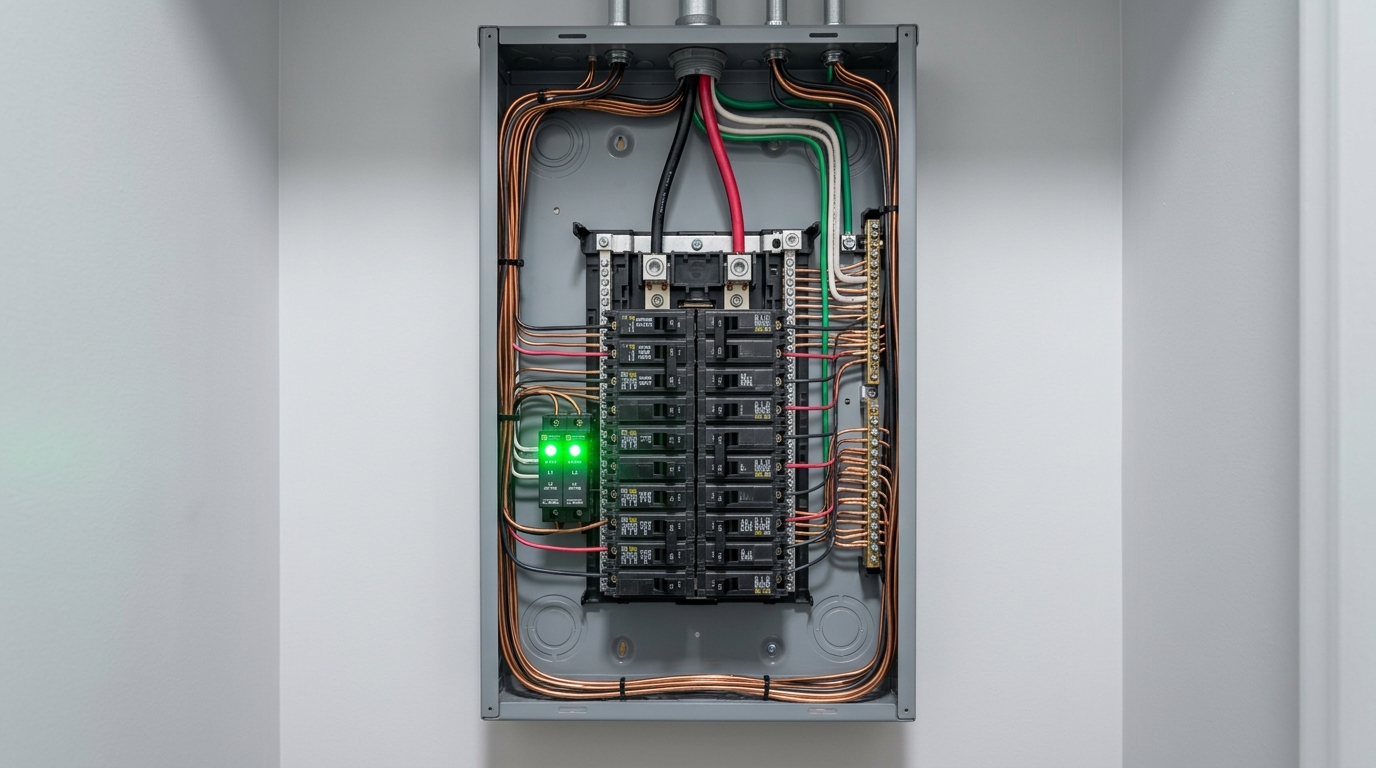 FIELD INSTALLATION EXAMPLE
Many older Tulsa homes were built with 60-amp or 100-amp services that were never intended to support modern heat pumps, tankless water heaters, induction ranges, hot tubs, or EV chargers. Even when total amperage is adequate, older panels often run out of physical breaker spaces, leading to illegal 'double-lugged' breakers.
We also frequently replace panels showing signs of busbar pitting, rust from water intrusion down the service entrance cable, or recalled/obsolete breaker designs that fail to trip under overcurrent conditions.
- 100A to 200A & 400A complete overhead and underground service upgrades
- Replacement of Federal Pacific (FPE), Zinsco, Challenger, and split-bus panels
- Storm-damaged weatherhead, rigid riser, and meter socket repairs
- Subpanel installations for detached shops, garages, and additions
Every service lug and breaker termination we install is tightened using a calibrated torque wrench or torque screwdriver to the manufacturer's inch-pound specification—never 'by feel.'
Exterior Emergency Disconnects & Utility Coordination
Modern NEC updates require one- and two-family dwellings to have a readily accessible exterior emergency disconnect labeled 'EMERGENCY DISCONNECT, SERVICE DISCONNECT.' When we replace a full service or meter base, we install an integrated meter-main combo or exterior main disconnect.
This not only satisfies municipal inspection requirements around Tulsa, Broken Arrow, and Owasso, but also allows us to isolate power outside so your interior load center can be worked on safely as a downstream panel.
 TECHNICAL SPECIFICATION
Working Clearances, Directory Labeling & Neutral Separation
When an exterior meter-main acts as the first service disconnect, your interior breaker panel becomes a subpanel in the eyes of the code. That means the neutral bar and equipment ground bar inside the interior panel must be isolated from each other, with a 4-wire feeder (Hot, Hot, Neutral, Ground) running between the exterior disconnect and interior panel.
We also ensure every circuit is traced and permanently labeled on the panel directory so you never have to play guessing games in the dark.
TECHNICAL SPECIFICATION
What We Find vs. How We Build It
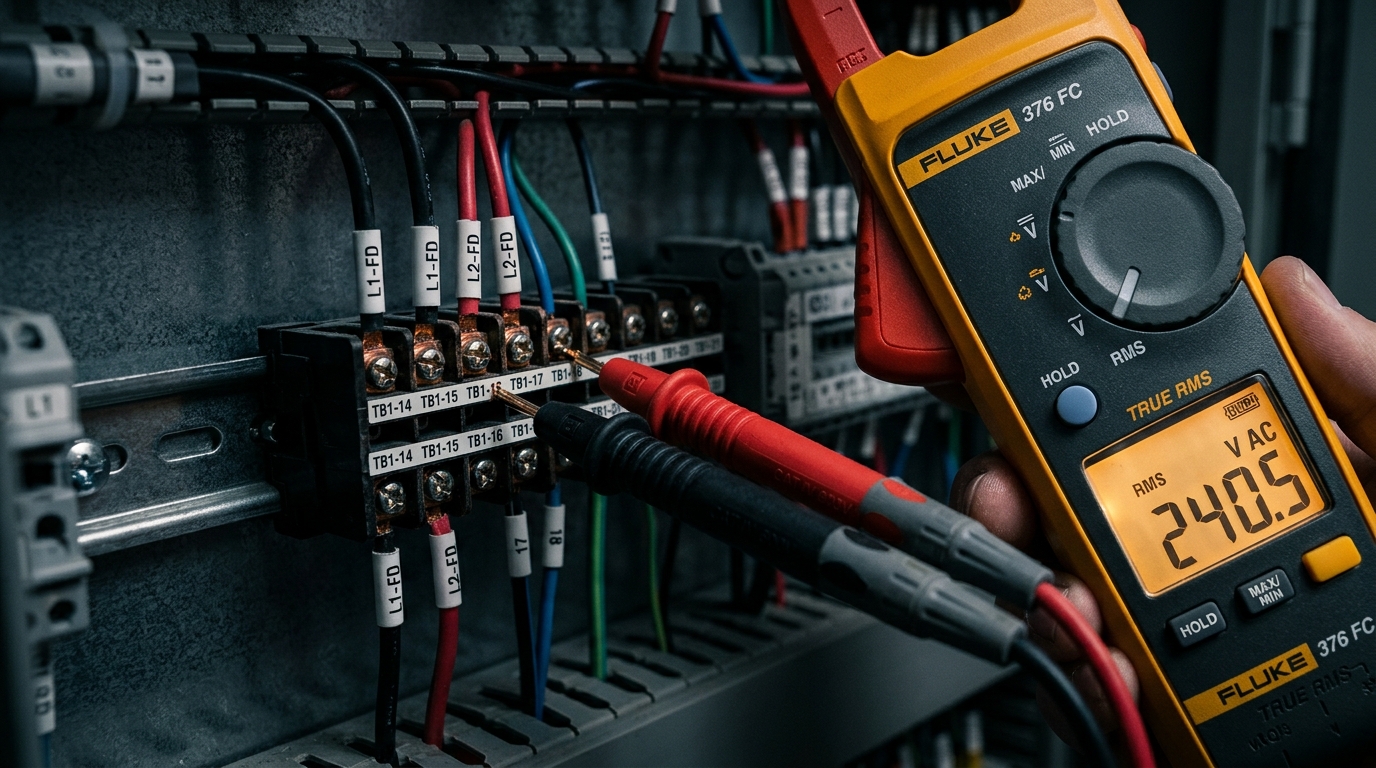

Why We Do It This Way — Service & Panel Code Items
When we quote a panel change or service upgrade, these are the primary code requirements that dictate where panels can go and how they are configured:
Exterior Emergency Disconnects for Dwellings
Requires all one- and two-family dwellings to have an emergency disconnecting means located in a readily accessible outdoor location and marked accordingly.
Allows firefighters or utility personnel to shut off all power to the structure from outside during a fire, flood, or gas leak, and lets you de-energize the entire indoor panel completely for future work.
Dedicated Working Space & Clearances Around Panels
Electrical panels require a clear working space at least 30 inches wide, 36 inches deep in front of the panel, and 6.5 feet high—and panels cannot be installed inside clothes closets or bathrooms (NEC 240.24).
Guarantees that you or a technician can safely access breakers and open the panel cover fully without being trapped or cramped against plumbing or storage.
Accurate, Specific Circuit Directory Identification
Every circuit and circuit modification must be legibly identified as to its clear, evident, and specific purpose on a directory on the face or inside of the panel door. Labels cannot rely on transient conditions like 'Billy's Bedroom.'
Saves critical time during an emergency or repair so you know exactly which breaker controls which room or appliance.
Main Bonding Jumper Location & 4-Wire Subpanel Feeds
Neutral and ground are bonded together at ONE location only: the main service disconnect. Every panel downstream of that disconnect must keep neutrals on an insulated bar and equipment grounds on a separate bonded bar.
Prevents normal unbalanced household return current from flowing on metal appliances, conduits, and ground wires.